
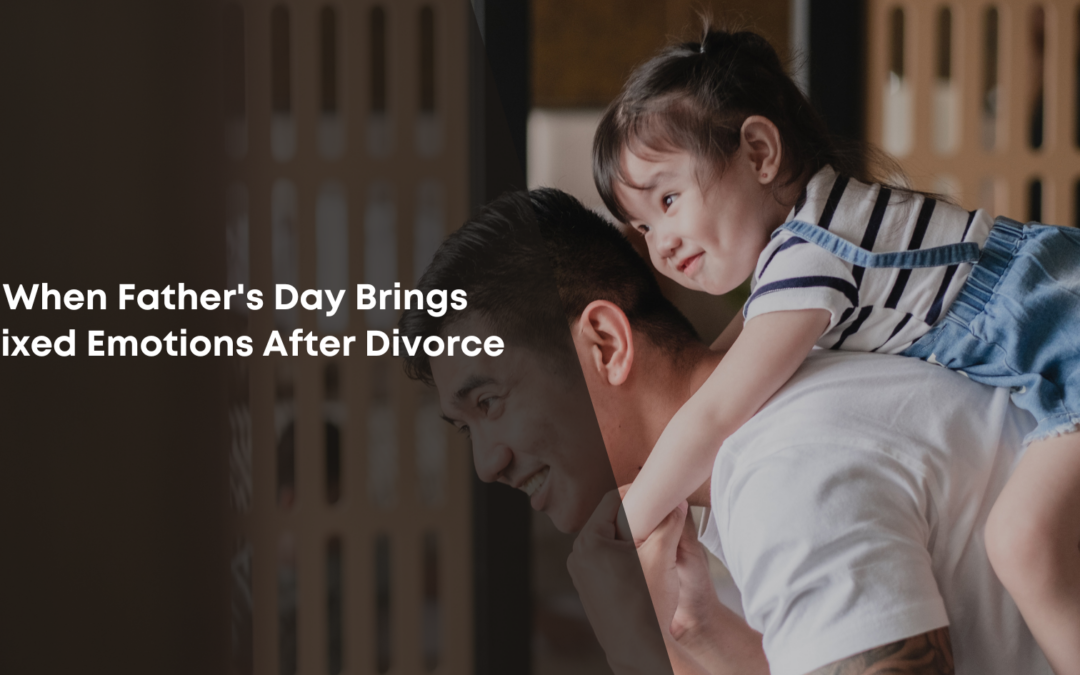
Father’s Day is supposed to be a celebration. Yet for many people navigating separation or divorce, the holiday can feel surprisingly heavy.
Maybe you’re a father who won’t see your children on Father’s Day this year. Maybe you’re a mother helping your children celebrate their dad while managing your own complicated feelings. Or perhaps you’re in the middle of a divorce, wondering how a day that once brought joy has become a source of stress, sadness, or uncertainty.
You tell yourself it shouldn’t bother you this much. But then the advertisements, social media posts, and family gatherings begin to appear everywhere. Suddenly, you’re reminded of what life used to look like—and what it looks like now.
The question many people ask themselves is: “Will Father’s Day always feel this difficult?”
The answer may surprise you.
Why Father’s Day Can Feel So Difficult During Divorce
For many families, Father’s Day becomes complicated long before the holiday arrives.
There may be disagreements about parenting schedules, uncertainty about who will spend time with the children, or tension between former spouses who struggle to communicate. Coordinating gifts, celebrations, and expectations can feel overwhelming when a family is already experiencing significant change.
But the practical challenges are only part of the struggle.
Many fathers experience grief over lost time with their children. Many mothers feel torn between supporting their children’s relationship with their father and processing their own emotions about the divorce. Children often feel caught in the middle, worried about disappointing one parent while trying to celebrate the other.
Perhaps most frustrating of all, a day that should be focused on honoring the parent-child relationship can become overshadowed by conflict, resentment, or logistical battles. Children deserve the freedom to love both parents. Fathers deserve meaningful relationships with their children. Families deserve holidays that create memories instead of tension.
The good news is that it doesn’t have to be this way.
A Better Way Forward
My name is Steven Unruh, and I have spent more than 40 years helping couples navigate separation and divorce as a mediator and psychotherapist.
Over the years, I have worked with countless families facing difficult holidays, including Father’s Day. I understand how painful and complicated these moments can feel. More importantly, I’ve seen families find healthier ways to navigate them.
If Father’s Day is bringing up mixed emotions this year, here are several strategies that can help.
Focus on the Relationship, Not the Schedule
When conflict arises around Father’s Day, it’s easy to become fixated on the calendar.
Who gets which hours? Who had the children last year? What feels fair?
While scheduling matters, the larger goal is preserving and strengthening the parent-child relationship. Children benefit when both parents prioritize meaningful connections over winning disputes.
Instead of asking, “How can I get my way?” try asking, “What arrangement best supports my child’s relationship with their father?”
That shift alone can transform conversations and reduce conflict.
Give Yourself Permission to Feel What You Feel
Many people believe they should be “over it” by now.
They criticize themselves for feeling sad, angry, lonely, or disappointed during holidays. Yet these emotions are a normal part of adjusting to major life changes.
Father’s Day may remind you of traditions that no longer exist. It may highlight losses that still hurt. It may bring up concerns about the future.
Acknowledging those emotions is healthier than pretending they aren’t there. When you recognize your feelings without judgment, they often become easier to manage.
Create New Traditions
One of the most powerful ways to move forward after divorce is to stop comparing every holiday to the past.
The goal is not to recreate what once was. The goal is to create something meaningful now.
Consider establishing new Father’s Day traditions such as:
- A special breakfast with the kids
- An annual outdoor activity
- A favorite restaurant visit
- A family volunteer project
- A personalized gift-making tradition
New traditions help families build positive memories while embracing their current reality.
Keep Children Out of Adult Conflict
Children should never feel responsible for managing their parents’ emotions.
Avoid asking children to relay messages, choose sides, or carry the burden of adult disagreements. Encourage them to celebrate their father freely without guilt or pressure.
When children feel safe loving both parents, they experience less stress and greater emotional security.
One of the greatest gifts divorced parents can give their children is permission to maintain healthy relationships with both mom and dad.
Use Mediation to Prevent Future Holiday Conflicts
Many Father’s Day disputes begin months before the holiday itself.
Unclear parenting agreements, unresolved communication issues, and lingering resentment often create recurring problems that surface during special occasions.
Divorce mediation provides a constructive way to address these challenges.
Through mediation, parents can:
- Develop clear holiday parenting schedules
- Improve communication
- Reduce misunderstandings
- Resolve disagreements respectfully
- Create child-focused solutions that work for everyone
Rather than returning to conflict every holiday season, mediation helps families establish a framework for cooperation and stability.
“But Our Situation Is Too Complicated”
Many people hesitate to seek help because they believe their circumstances are unique.
Perhaps communication has completely broken down. Maybe there is significant hurt, anger, or distrust. You may feel that productive conversations are no longer possible.
These concerns are understandable.
However, mediation is specifically designed for situations where communication has become difficult. You don’t need a perfect relationship to make progress. You only need a willingness to explore better solutions.
In my experience, even families facing significant challenges can often find common ground when the focus remains on what is best for their children and their future.
You Don’t Have to Face This Alone
If Father’s Day brings mixed emotions this year, know that you are not alone.
The sadness, uncertainty, frustration, and grief many people experience during divorce-related holidays are real. But they do not have to define your future.
With the right support, clear communication, and a commitment to finding healthier solutions, holidays can become less stressful and more meaningful for everyone involved.
Imagine approaching future Father’s Days with confidence instead of anxiety. Imagine having a clear plan, fewer conflicts, and more opportunities for your children to enjoy meaningful time with both parents.
That future is possible.
If you’re struggling with co-parenting challenges, holiday scheduling conflicts, or difficult divorce-related decisions, I invite you to schedule a consultation. Together, we can explore practical solutions that help you move forward with greater clarity, cooperation, and peace of mind.
Recent Comments