
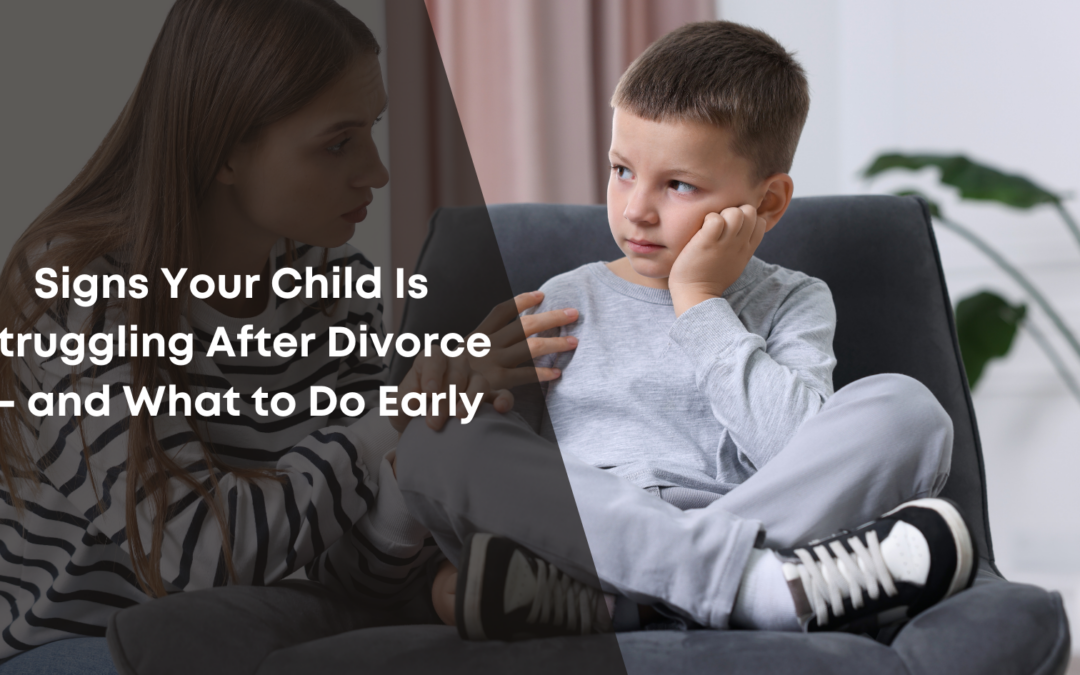
At first, it’s subtle.
Your child says they’re “fine.” But something feels different. Maybe they’re quieter. Maybe they’re angrier. Maybe their teacher emails about slipping grades. You tell yourself it’s just an adjustment period.
But what if it’s more than that?
If you’re going through a divorce, one of your greatest fears is that your child will suffer silently. You don’t want to overreact — but you also don’t want to ignore warning signs that could turn into long-term emotional struggles.
Let’s talk about how to recognize when your child is struggling after divorce — and what you can do early to protect their well-being.
The Real Challenge Divorced Parents Face
Divorce changes everything for a child. Two homes. Two schedules. Two sets of expectations. Even in the most amicable separations, the shift can feel overwhelming.
You may begin to notice:
Increased irritability or anger
Withdrawal from friends or activities
Changes in sleep or appetite
Falling grades
Anxiety at transition times
Physical complaints like headaches or stomachaches
At the same time, you are managing your own stress — legal decisions, financial adjustments, housing changes, and emotional strain. You may feel guilt. You may question whether you caused this. You may feel defensive or exhausted when problems arise.
And underneath it all is a hard truth: children didn’t choose this situation. They didn’t ask for divided holidays or tense exchanges between parents. When conflict continues or communication breaks down, it places a burden on them that simply isn’t fair.
But it doesn’t have to unfold that way. There is a better approach — one that centers your child’s stability and emotional health from the beginning.
A Healthier Path for Your Child
My name is Steven Unruh, and I’m a divorce mediator with more than 30 years of experience helping families navigate separation with clarity and respect.
I care deeply about helping parents reduce conflict and create agreements that protect their children. When handled intentionally, divorce does not have to define your child’s future in negative ways.
Here are five practical steps to recognize early warning signs — and respond in ways that truly help.
1. Pay Attention to Behavioral Changes
Children rarely express emotional distress directly. Instead, they show it through behavior.
Watch for:
Sudden mood swings
Defiance or increased anger
Regression (clinginess, bedwetting, baby talk)
Perfectionism or people-pleasing
Risk-taking behavior in teens
The key is noticing patterns, not isolated incidents. If behaviors persist for several weeks or intensify, it may be a sign your child needs additional support.
Early awareness allows you to intervene before struggles become entrenched.
2. Reduce Conflict Wherever Possible
Research consistently shows that ongoing parental conflict harms children more than divorce itself.
If your child:
Hears arguments
Feels pressured to choose sides
Acts as a messenger between parents
Senses tension at exchanges
Their stress increases dramatically.
Divorce mediation provides a structured, neutral environment where parents can work through disagreements without escalating hostility. Instead of courtroom battles, mediation focuses on collaborative problem-solving.
Lower conflict equals greater emotional safety for your child.
3. Create Stability and Predictability
Children thrive on routine. Divorce often disrupts that sense of consistency.
You can help by establishing:
Clear parenting schedules
Consistent bedtimes and homework expectations
Predictable exchange routines
Advance communication about changes
Through mediation, parents can develop detailed parenting plans that reduce uncertainty. When children know what to expect, anxiety decreases and confidence grows.
4. Encourage Safe, Open Communication
Children sometimes hide their feelings because they don’t want to upset either parent.
Create space for honest conversations by:
Asking open-ended questions
Listening without interrupting
Avoiding criticism of the other parent
Reassuring them they don’t have to “take sides”
Simple statements like, “It’s okay to love both of us,” can relieve enormous emotional pressure.
When children feel safe expressing emotions, they are less likely to internalize stress.
5. Seek Support Early
If you notice persistent sadness, anxiety, academic decline, or behavioral escalation, don’t wait.
Consider:
A licensed child therapist experienced in divorce adjustment
School counselor involvement
Co-parent counseling
Parenting coordination support
Early intervention often prevents long-term emotional challenges.
Seeking help is not an admission of failure — it’s a proactive decision to protect your child’s future.
“What If My Ex Won’t Cooperate?”
Many parents hesitate to pursue mediation because they assume the other parent won’t participate constructively.
But mediation isn’t about forcing friendship. It’s about creating workable agreements that reduce conflict and clarify expectations. Even parents who disagree strongly can benefit from a guided process that prioritizes their child’s best interests.
You don’t have to resolve every difference. You do need a system that keeps those differences from harming your child.
Take the First Step Toward Stability
Imagine your child feeling secure moving between homes.
Imagine fewer tense exchanges.
Imagine clear agreements that reduce uncertainty and stress.
That future is possible — but it requires intentional action now.
If you’re noticing signs your child may be struggling after divorce, don’t ignore your instincts.
As a divorce mediator with more than 30 years of experience, I help parents create child-centered agreements that reduce conflict and build stability. Mediation can save time, reduce costs, and most importantly, protect your child’s emotional well-being.
You don’t have to navigate this alone.
Reach out today to schedule a confidential consultation and begin creating a calmer, healthier path forward for your family.
Recent Comments