
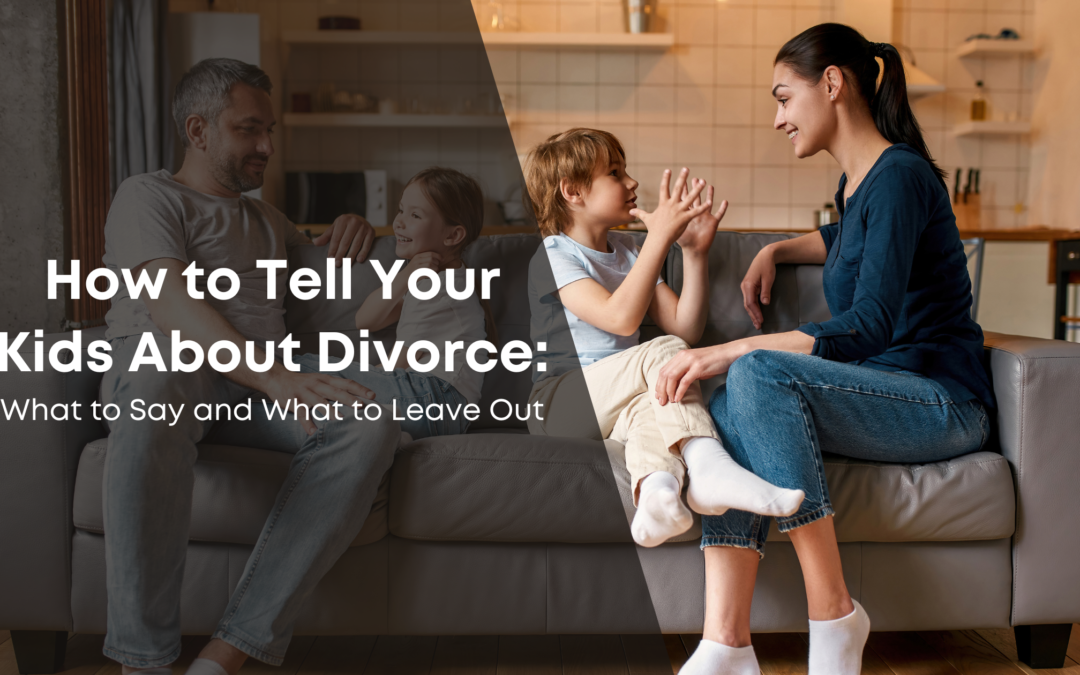
Lisa had rehearsed the words in the car, in the shower, and at 3 a.m. while staring at the ceiling. Then her eight-year-old looked up from his cereal and asked, “Mom, why do you and Dad seem so weird lately?” Lisa opened her mouth. What she said next would shape how her son remembered the end of his family for the rest of his life.
Why Telling Your Kids About Divorce Feels Impossible
You have to pick a day, a place, and the right words, all while juggling attorneys, finances, and a dozen decisions about where everyone will live. Often you and your spouse are barely speaking, so even deciding who says what becomes another argument.
Underneath the logistics is a heavy emotional weight. You feel guilty. You dread seeing your child’s face crumple. You worry that one wrong sentence will cause damage that can never be undone, and you wonder whether you’ve already failed them.
And here is the part that just isn’t right: your children didn’t choose this. They shouldn’t have to carry adult problems, deliver messages between two homes, or be handed a story where one parent is the villain. Kids deserve honesty and safety, not a front-row seat to their parents’ conflict.
It doesn’t have to be this way. There is a better way to have this conversation.
A Better Way to Talk to Your Children About Divorce
I’m Steven Unruh, a divorce mediator with more than 40 years of experience. In that time I’ve sat with thousands of parents who were afraid of this exact moment. I care deeply about helping families come through divorce with their relationships intact, especially the relationships between parents and children. Here is the advice I give every parent I work with.
1. Plan the Conversation Together, If You Can
Children do best when they hear the news from both parents at the same time. Agree in advance on the basic message, who will say what, and when and where you’ll tell them. Choose a calm moment, such as a weekend morning, not right before school, a birthday, or bedtime. Even if the marriage is ending, this is one of the first chances to show your kids you can still parent as a team.
2. Keep It Simple and Age-Appropriate
A six-year-old needs a few short sentences. A sixteen-year-old can handle more detail and will likely have more questions. In every case, say it plainly: “Mom and Dad have decided to live in separate homes. This is a grown-up decision, and we’ve thought about it carefully.”
3. Leave Out the Blame and the Adult Details
Your children do not need to know about affairs, money fights, or who “caused” this. Skip the blame, even when it’s tempting. Never use your child as a confidant, a messenger, or a referee. If you wouldn’t want your child repeating it to the other parent, don’t say it.
4. Make Sure They Hear These Three Things
Whatever else you say, every child needs to hear:
- “This is not your fault.” Kids often quietly believe they caused it.
- “We both love you, and that will never change.”
- “You will be taken care of.” Tell them what is staying the same: their school, their friends, their routines, as far as you can.
5. Expect More Than One Conversation
Your child may react with tears, anger, silence, or a question about what’s for dinner. All of these are normal. Keep the door open, check in often, and answer follow-up questions honestly. This is the first of many conversations, not a single event.
“But My Spouse and I Can’t Even Be in the Same Room”
I hear this a lot, along with “What if they fall apart?” and “I’m just not ready.” These are natural fears, and they’re signs you care about your kids. But waiting for a perfect moment rarely works, and children often sense something is wrong long before they’re told. The silence can be more frightening than the truth.
This is where divorce mediation can help. In mediation, a neutral third party guides you and your spouse through the hard decisions, including a parenting plan, in a calm and structured setting. We can work out together how and when to tell the children. Mediation is typically less costly and less adversarial than a courtroom battle, and it keeps the decisions about your family in your hands, not a judge’s. Parents who mediate are far more likely to communicate respectfully afterward, and your children benefit most from that.
Take the First Step Toward a Healthier Family Future
You don’t have to figure this out alone, and you don’t have to get it perfect. You only have to take the first step. Contact me at stevenunruh.com to schedule a consultation. Together we’ll talk through your situation, your concerns, and your children.
Imagine a year from now: your kids know they are loved by both parents, you can attend their games and recitals without dread, and the home they come back to is peaceful. That future is possible, and it starts with one honest conversation.
Recent Comments