
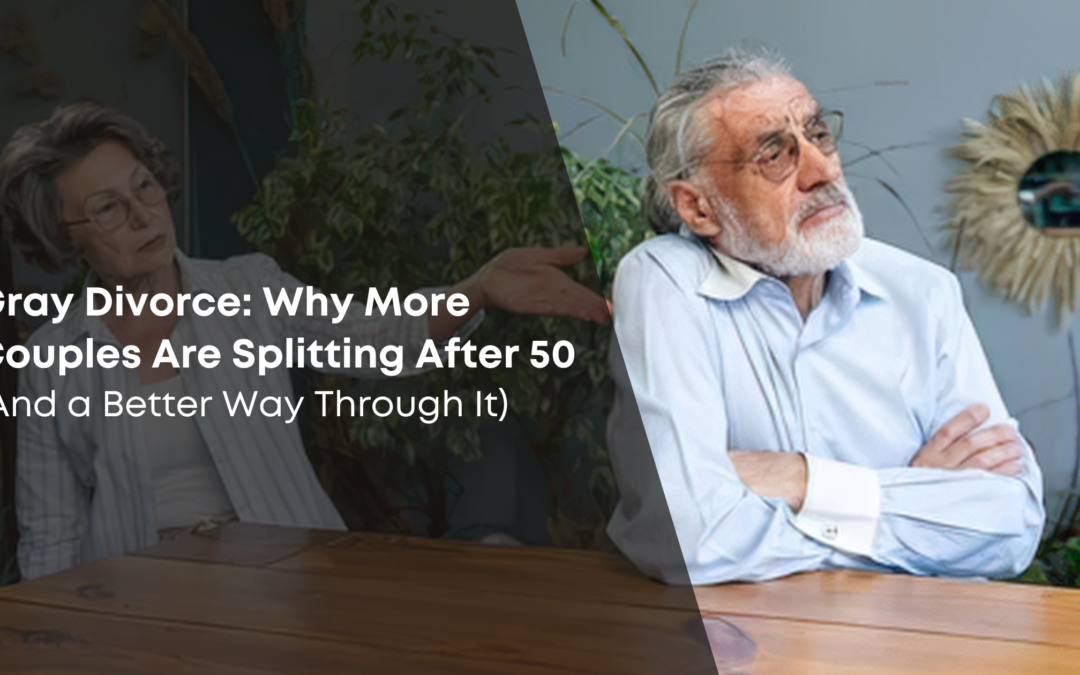
Margaret was 58 when her husband set down his coffee and said, “I don’t think I can do this anymore.” Thirty-one years of marriage, two grown kids, a paid-off home, and in one quiet kitchen moment, every retirement plan she’d ever imagined seemed to vanish. What Margaret did over the next six months surprised her family, her friends, and even her attorney. But first, it helps to understand why so many people over 50 find themselves standing exactly where she stood.
Gray Divorce Is Rising, and It’s Hitting People Hard
Gray divorce, meaning divorce after age 50, has roughly doubled since the 1990s. If you’re facing one, you already know the practical stakes. Decades of shared finances have to be untangled: retirement accounts, pensions, the family home, health insurance, and Social Security. You have fewer working years left to recover from a bad settlement, and every dollar spent on legal fees is a dollar taken from your future.
Then there’s what it does to you personally. You may feel like you’ve failed, even if you didn’t choose this. You may grieve a marriage that was your identity for thirty years, or lie awake wondering who you are without “we.” Starting over at 55, 60, or 65 can feel frightening and lonely.
And honestly, it just isn’t right. You spent decades raising a family, building a home, and sacrificing for a shared future. You shouldn’t be forced into a courtroom fight against someone you once loved, watch your life savings drain into legal bills, and lose your peace of mind at the very stage of life meant to reward your effort. But it doesn’t have to be this way.
There’s a Better Way to Go Through a Gray Divorce
I’m Steven Unruh, a divorce mediator with more than 40 years of experience. I’ve sat across the table from thousands of couples at exactly this crossroads, and I care deeply about helping people come through it with their finances, dignity, and futures intact. Here are five things I’d want you to know if we were sitting down together today.
1. Understand Why It’s Happening
Gray divorce rarely comes from one dramatic event. More often it’s a slow build. Common reasons include:
- The empty nest: When the kids leave, couples discover how little they’ve connected outside of parenting.
- Longer lifespans: Many people don’t want to spend another 30 years in an unhappy marriage.
- Less stigma: Divorce is far more accepted than it was for previous generations.
- Financial independence: More spouses, especially women, can support themselves.
- Growing apart: People change over decades, and not always together.
Knowing the “why” won’t fix everything, but it can quiet the self-blame.
2. Get a Clear Picture of Your Finances First
Before any decisions, gather the facts. Make a list of:
- Retirement accounts (401(k)s, IRAs) and pensions
- Real estate and other major assets
- Debts and monthly expenses
- Health insurance coverage and how it would change
- Expected Social Security benefits
You can’t negotiate well from a fog. Clarity gives you confidence.
3. Protect Your Retirement, Not Just Your Pride
In a gray divorce, the fight over the house or “who was right” can cost you what matters most: long-term security. Ask hard questions. Can you afford to keep the house? How will retirement assets be divided fairly? What will your income look like in ten years? Trade-offs that feel satisfying today can be expensive later, so make decisions with your future self in mind.
4. Choose Mediation Over a Courtroom Battle
Divorce mediation lets you and your spouse work with a neutral professional to reach your own agreement. For couples over 50, the benefits are significant:
- Lower cost: Mediation typically costs a fraction of a litigated divorce.
- Faster resolution: You can finish in months rather than years.
- Privacy: Your finances and family matters stay out of the public courtroom.
- Control: You decide the outcome, not a judge who has never met you.
- Less conflict: That matters for adult children, grandchildren, and holidays you’ll share for years.
5. Take Care of Your Emotional Health
Don’t try to carry this alone. Lean on trusted friends, a counselor, or a support group. Avoid making big decisions at the peak of your grief or anger. Rebuilding your sense of self is just as important as dividing your assets.
“But What If My Spouse Won’t Cooperate?”
This is the most common concern I hear. Many people assume mediation only works for friendly divorces. In reality, most couples who come to me are hurt, angry, or barely speaking. A skilled mediator keeps the conversation productive and makes sure both voices are heard. You may also worry that mediation means giving in. It doesn’t. You’re free to consult an attorney throughout, and nothing is final until you agree to it. Most people are surprised by how much calmer the process feels than they expected.
Take the First Step Today
Remember Margaret? She chose mediation. Within a few months, she and her husband had a fair agreement, she kept the home she loved, and she protected her retirement. She even sat beside him at their daughter’s wedding. Not because divorce was easy, but because it was handled with respect.
You can have that same outcome. Contact me today to schedule your consultation. Together we’ll map out a path that protects your future and lets you look ahead with hope rather than dread.
Recent Comments